
Taking responsibility, acting sustainably
We contribute to society through functional, sustainable and aesthetic construction, and we assume a high degree of social responsibility.
Using its ESG Score tool, the sustainability assessor Arabesque gave GOLDBECK an overall rating of „B” (strong). This places our company in the top ten per cent of the companies assessed by Arabesque in the fields of construction and engineering.
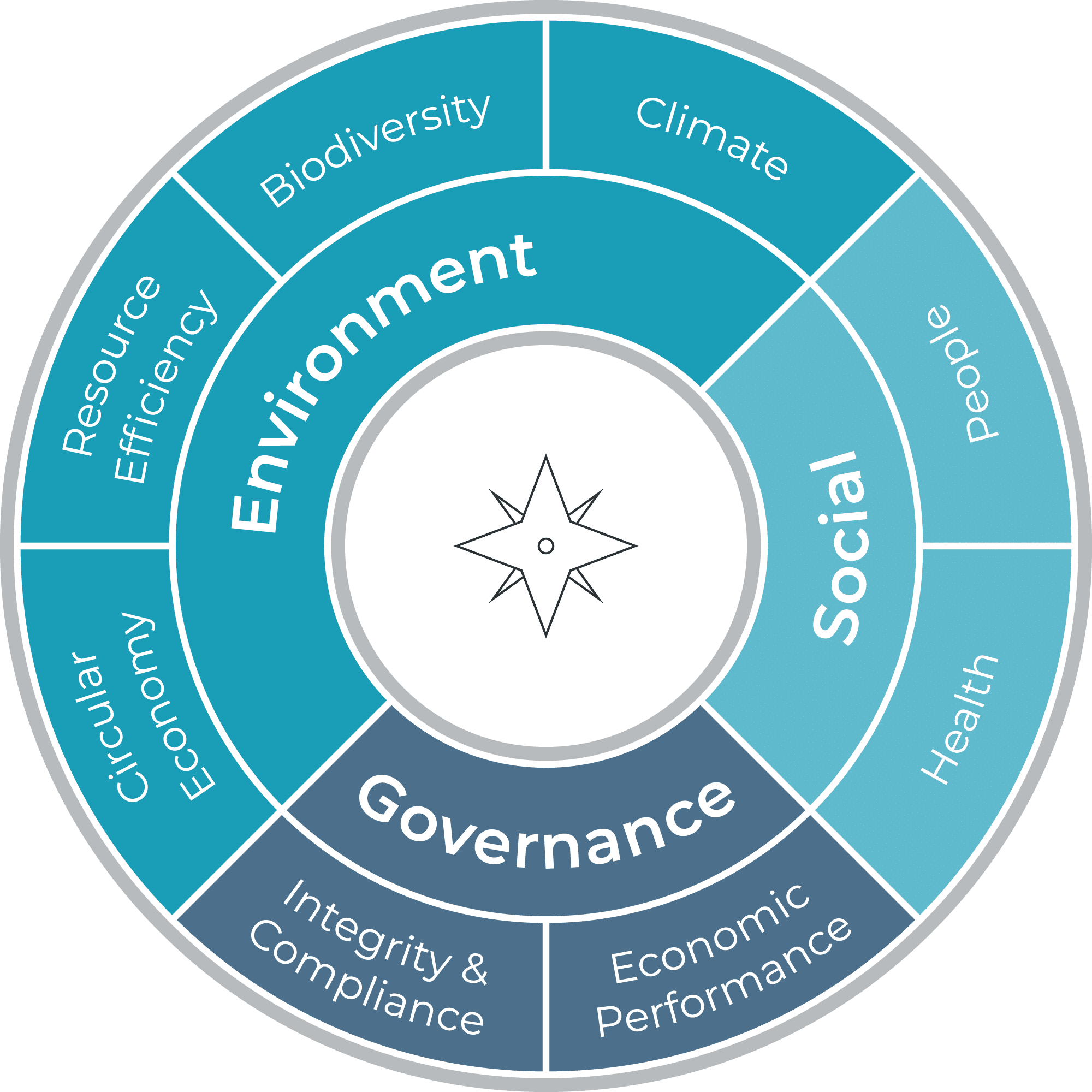
The sustainability compass
The compass groups our eight material ESG topics into focus areas – and does so twice over: at corporate level and at product & project level. It thus guides all of us on our way to more sustainability, including our internal sustainability organisation and, through individual product solutions, also our clients. The compass, which is integrated into our compass app, helps to analyse and define client needs with a view to sustainability requirements during project meetings.
Our sustainability compass’s focus areas are in part based on our materiality analysis, taking account of the United Nations Sustainable Development Goals (SDGs) and the EU taxonomy’s environmental objectives. The objectives set out in our roadmap are based on these focus areas and apply to both the corporate level and the product and project level.
Our ultimate goal is to become best in class in this field. That comes with a tremendous responsibility, and we still have a lot to do. But we embrace the challenge. We are constantly striving for improvement, exploring innovative ideas and developing solutions that have a positive impact on both people and the environment.
Watch our film, which captures our commitment to sustainability and built world.
Sustainable construction

is produced in the construction of the average GOLDBECK office building compared to a conventional reinforced concrete construction – including the dismantling and recycling stages.


1/2 Sustainability efforts
Through the GOLDBECK Foundation, we have committed ourselves to countless projects in the fields of education, culture and social affairs.
We support organisations working towards greater educational equity for children and young people, support students as an OWL study fund sponsor, and fund professorships at the Karlsruhe Institute of Technology and the Management University of East Westphalia-Lippe.